
One is not born, but rather becomes, a woman – Simone de Beauvoir
Some time ago a very interesting post on FaceBook caught my attention.
I hope it piques your curiosity as much as it did mine?
“In the summer of 1949, a forty-one year old philosopher named Simone de Beauvoir published a book – it is nearly 1000 pages long – two volumes in the language she had spoken (French) all her life. According to the article Simone spent over a year reading, interviewing, thinking, writing with the patience of someone who understood that the argument she was making needed to be sound. In its first week in French bookshops it sold 22 000 copies.
The Vatican placed it on its Index of Forbidden Books. Her long-time friend Albert Camus was offended. Catholic conservatives called her bitter, frustrated and unmarriageable. For years people have discussed and argued about the content of this book.
The book is called Le Deusieme Sexe – The Second Sex
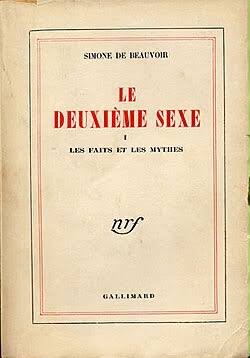
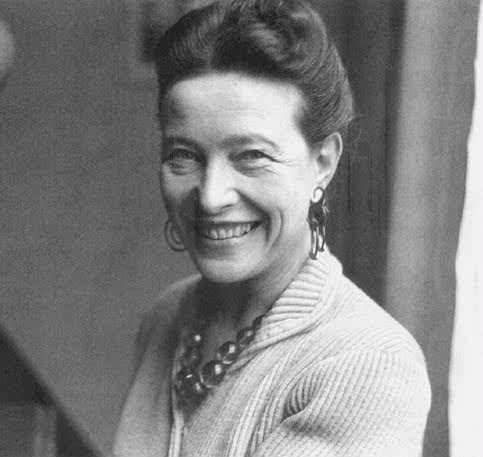

And almost everything it argued– across all those hundreds of pages, drawing on history, biology, literature, mythology, psychology and dozens of interviews with women – traced back to a single sentence she wrote……
“On ne nait pas femme : on le deveint”
“One is not born, but rather becomes a woman”
What a statement!
Just let it sit with you for a while, think about it and let it sink in.
Good grief………….no I am going to say it like it is, and how it landed with me.
Bloody hell! What a devastating thought and observation.
“One is not born, but rather becomes a woman”
Simone de Beauvoir points out: “the thing the world calls womanhood is not a natural fact.
It is a process. A girl is born not knowing what a woman is and that she is one. She learns it – slowly, over a lifetime, through an education so gradual and so total that most of it happens before she has the words to notice.”
I am shattered!
And I have sat with this for a while (and I absolutely agree with Ms de Beauvoir) girls are taught, or rather conditioned, from an early age, to become. We are given dolls, prams, pots and pans, stoves, dolls houses in preparation for womanhood. We are told to be quiet, to keep clean, to wear pretty little outfits and to look cute.
Oh yes, and we are told not be make a fuss, to call attention to ourselves or to shriek with joy or dance too wildly!!!!!
If a man makes a “pass at you” or you are at the receiving end of unwanted attention – You asked for it, what were you wearing, you were loud and noisy, and you came across as a loose woman.
In 1980 I worked as a liaison officer for the Ambulance Rescue Division in the Emergency services division of the Algoa Regional Services Council (the rural equivalent of the Municipality). One of my many tasks was to organise the training of male ambulance personnel, in Cape Town, which organised by the provincial govern and headed by Dr Mc Mahon. From the outset, the dear doctor and I clashed – in my opinion he was rude and arrogant. Matters came to a head when I suggested that women be given the opportunity to join the ambulance service in the capacity of emergency medical assistant – exactly like their counterparts. Dr Mc Mahon exploded and told me in no uncertain terms that women are only fit to work in the control room and as administrators. I was told that I was difficult and disagreeable. I kept on, insisting that women were more than capable of working alongside their male counterparts in an ambulance – It pains me to say that I won the fight, because this should never been an issue!
“One is not born…. One becomes…” should never ever happen in the first place.
In the late 1980’s , I attended a cocktail party at a friend’s parents’ house, where I overheard a group of men discussing the state of our nation in very unflattering terms.
Because, I have always believed that my opinion matters I made a comment about a broken and unequal education system. My input was met with total silence and then a raging fury! The following day my friend was summoned to his father’s office whereupon he was instructed never to bring me to the house again – after all women with opinions were dangerous and I apparently made the other women feel uncomfortable. There you have it! Please, know your place.
Whilst the above examples are highly sexist, they also speak an uncomfortable truth of being a woman. Don’t draw attention to yourself, don’t be loud and for heaven’s sake don’t have an opinion and if you do, please don’t express it.
“By the time she is an adult, Beauvoir said, the shape of her freedom has already been arranged for her. And the most difficult part – the part that makes the book uncomfortable today – is that she often cannot tell where her own desires end and the lesson begins.
The role has been offered to her as love.
As belonging!
As the shape of a normal life!
She participates in it not because she is weak, but because the cost of stepping outside it is high, and no one told her, at the age when it mattered most, that she had a choice – the small daily decision to stay inside as assigned self because the alternative is lonely or dangerous or exhausting”
Maybe it’s time we addressed this issue.
I believe it’s time to speak up and be bold.
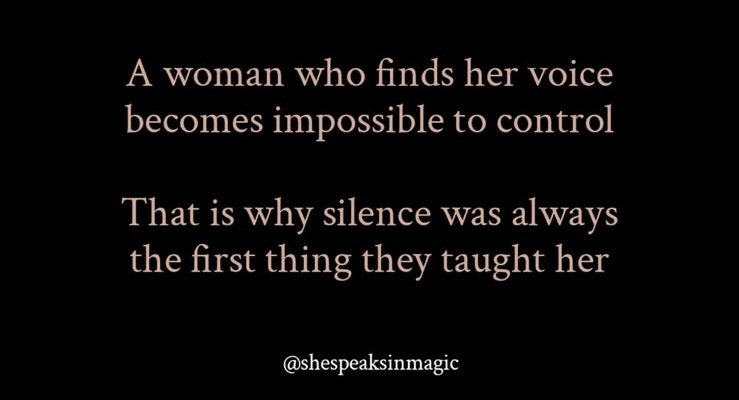
The dialogue changes and we tell girls that they have a right to be messy, noisy, to speak honestly how they feel and, no, they do not have to be silent.
And the church needs a big fat wake up call.
Oh yes, and if you want to see outrageously bold and outspoken – google an exchange between two political opponents Kathi Gebel and a certain Mr Reichart in the German National parliament known as the Bundestag.
Google it! You will witness a young woman who boldly defends her position when a man twice her age decides to belittle her!
I love it when women speak up most powerfully in unexpected ways!
Beware world as sometimes foolish woman and some of her friends are on a mission.
Over and out.


4 comments
Michelle
Quite the contraversial subject, Gail. Although, that being said, there have been gradual improvements over the years. The new generation of young women have more freedom to express themselves than our generation did. I am hopeful that this trend continues.
Maxine Ward-Cox
Thanks for the information on Simone de Beauvoir. A truly inspiring woman!
GEORGE Charalambous
Very thought provoking, to say the least
Gail Charalambous
Thank you.
Comments are closed.